About
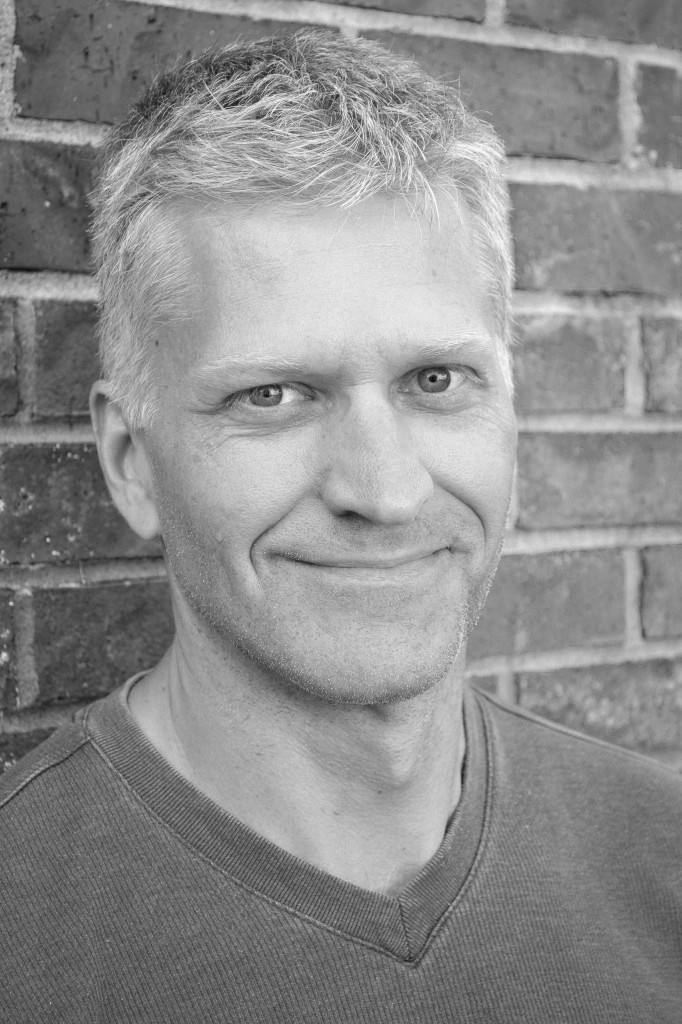
I’m a naturopathic physician, educator, and independent researcher with a career spanning clinical practice, academic teaching, and computational biomedicine. My work is driven by a conviction that has deepened over thirty years of practice: medicine — including most of integrative medicine — is operating with a fundamentally incomplete map of what living systems actually are.
The Core Claim
Living systems are not primarily molecular machines. They are organizational patterns maintained by informational fields — and health is the coherent coupling of physical tissue to deeper archetypal organizational sources. Disease begins as a loss of that coherence, often long before molecular pathology is detectable. Remedies, prepared correctly, act not by replacing missing molecules but by restoring informational coherence between tissue and its organizational source.
This is not a new intuition — it is what the alchemical, vitalist, and traditional medical traditions understood and worked with, expressed in the language available to them. What’s new is the possibility of grounding it rigorously in modern physics and biology. Evidence is accumulating from unexpected directions — bioelectric morphogenetics, quantum coherence in biology, developments in theoretical physics around holographic geometry and implicate order — that the traditional intuition was pointing at something real. My work is an attempt to build that grounding systematically, and to make it clinically actionable.
What distinguishes this from much of the alternative and integrative medicine landscape is a refusal to replace pharmaceutical reductionism with botanical reductionism. The drift in alternative medicine toward standardized extracts, isolated constituents, and molecular targets adopts the same flawed ontological framework — discarding precisely the informational and relational dimensions that made traditional systems genuinely effective. This framework goes in the opposite direction: taking the informational ontology seriously enough to build rigorous theory around it.
Clinical & Academic Background
I trained as a naturopathic physician and completed graduate education in Chinese and East Asian medicine, followed by residency-based clinical practice. I have been seeing patients for nearly thirty years, with a focus on complex, chronic, and systems-oriented health concerns.
I served for more than seventeen years as an assistant professor at the National University of Natural Medicine, teaching physiology, biochemistry, pathology, and endocrinology while supervising patient care in academic teaching clinics. That sustained immersion in both the science and the clinical reality of integrative medicine continues to shape everything I do — including a healthy skepticism toward frameworks that are easier to defend institutionally than they are true to the phenomena.
Theoretical Framework
My current research develops a unified clinical architecture mapping the organ-network and pattern theories of Asian classical medicine, anthroposophical medicine, and modern neuroendocrine-immune physiology onto a common framework — grounded in an informational rather than molecular ontology of health.
The organ systems of TCM, the planetary life processes of anthroposophical medicine, and the neuroendocrine axes of modern physiology are, I believe, three observational traditions that have been triangulating the same underlying reality from different angles — the archetypal organizational modes through which the implicate order expresses itself in living tissue. The goal is a coherent, clinically actionable synthesis that honors the explanatory depth of each tradition while building something genuinely new from their convergence.
Botanical medicine occupies a central place in this framework — not as a collection of isolated therapeutic agents but as an informational therapeutic language. Plants carry specific organizational signatures that resonate with specific tissue states and archetypal organ modes. Preparing and prescribing them well means working with that informational content, not extracting and amplifying their molecular constituents. I am developing this into structured clinical decision-support tools through the PhytoElixia initiative.
Research & Analytical Background
I completed a two-year National Library of Medicine postdoctoral fellowship in bioinformatics and computational biomedicine at Oregon Health & Science University, where my work focused on multimodal health data, predictive modeling, and applied clinical data analysis.
My earlier academic training in physics and mathematics shaped a lasting interest in dynamic systems, variability, and pattern formation — and a persistent intuition that the most important phenomena in biology are organizational rather than molecular. I am particularly interested in longitudinal and time-dependent processes, multi-system interactions, and interpretable modeling methods that connect quantitative patterns to clinically meaningful phenomena. I am available for consulting in medical and naturopathic data science, including clinical data analysis, systems modeling, and decision-support tool development.
Teaching & Writing
I run a bimonthly mentorship group for integrative practitioners focused on systems-based clinical reasoning and organ-pattern approaches to complex disease — currently serving as a live development space for the theoretical framework described above. I write for a professional audience on Substack, and maintain an archive of recorded lectures from my years as a professor through my teaching page.
The work is ongoing, collaborative, and genuinely open-ended. If any of this resonates — as a patient, a practitioner, or a potential collaborator — I’d welcome the conversation.